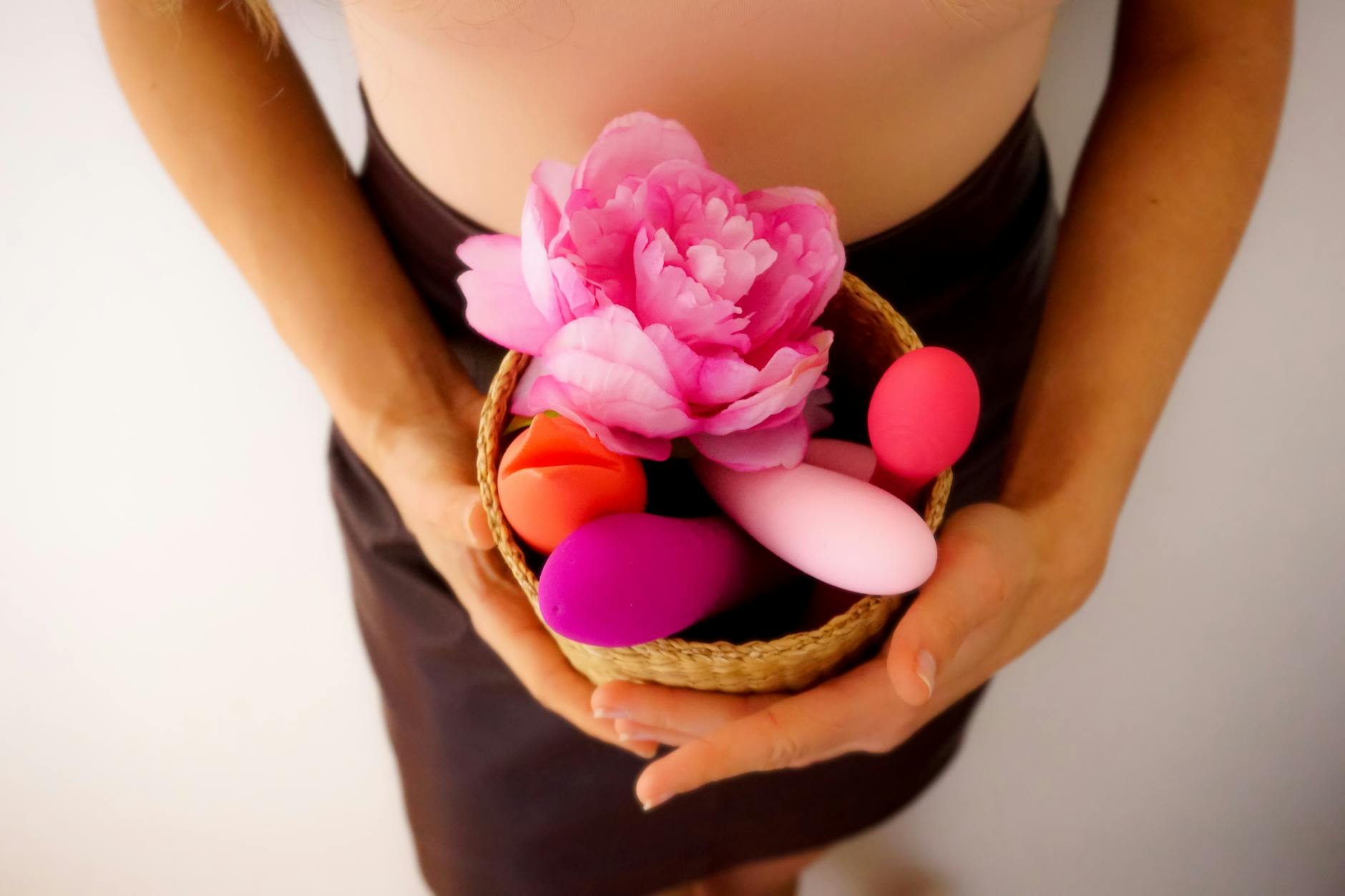
How to Use Lemon Vibrators When Clitoral Sensitivity Varies Throughout Your Cycle
Here's what nobody tells you
Your clitoris isn't the same every day of the month. It swells, it softens, it becomes hypersensitive, then it pulls back. Estrogen and testosterone are constantly shifting, blood flow changes, even the thickness of the skin over your clitoris varies. So when you use a lemon vibrator the same way every single week, you're working against your own body half the time.
I'm going to walk you through what happens to your clitoris during each phase of your cycle, and exactly how to adjust your lemon sexual toys for maximum sensation instead of frustration.
Why your lemon vibrator feels different week to week
If you've ever wondered why your clitoral vibrator feels amazing one week and almost too intense the next, your hormones are the answer. During the follicular phase (menstruation through ovulation), estrogen is rising. This increases blood flow to your genitals, plumps the tissue, and makes your clitoris swell. More swelling means more nerve endings are accessible. A lemon vibrator that felt perfect last week might feel too subtle now.
Then ovulation hits. Testosterone peaks right before and after, which cranks desire and sensitivity to eleven. This is often when people report the most intense orgasms of their cycle. But intensity isn't always comfortable. This is when you might want to dial down the pressure on your clitoral vibrator, not crank it up.
After ovulation comes the luteal phase. Progesterone rises, blood flow decreases, and your clitoris essentially pulls back into itself. The tissue thins slightly. Sensation flattens. A vibrator setting that worked during ovulation might feel completely absent now.
Understanding this isn't just trivia. It's the difference between forcing an orgasm and letting one happen naturally.
The menstrual phase
Day 1 to day 5 (roughly). Your period is here, hormone levels are at their lowest of the cycle. This is when many people experience decreased clitoral sensitivity overall. Blood flow is diverted to help with uterine shedding, so your clitoris gets less of it.
What to do: Use lower settings on your lemon vibrator during your period. If you usually prefer setting 4 or 5, drop to 2 or 3. The suction mechanism of a lemon clitoral vibrator is particularly good here because it doesn't require hard pressure. It creates stimulation through vacuum, which feels gentler but still effective when sensitivity is down.
Timing matters too. Some people find that pleasure picks up in the last day or two of bleeding, as hormone levels start their climb. You might experiment with a shorter session (5 to 10 minutes instead of 15) and see if that helps you stay present without chasing sensation that isn't quite there yet.
Pairing your lemon adult toys with external warmth helps. A heating pad on your lower belly or a warm bath beforehand increases blood flow to your pelvic region, which can sharpen sensation even when hormones are low.
The follicular phase
Day 6 to day 12 (roughly). Estrogen starts climbing. Your mood lifts, your energy increases, and your clitoris begins its monthly swell. This is when sensitivity starts creeping back up.
What to do: Slowly increase the intensity of your lemon vibrator as the days progress. If you started at setting 2 during your period, move to setting 3 around day 7, then setting 4 by day 10 or 11. Pay attention to what feels right rather than forcing a number. You're literally working with an expanding clitoris here, so more stimulation is generally welcome.
Your warm-up time decreases during this phase. Arousal builds faster because blood flow is already elevated. You might find that 10 to 15 minutes of foreplay is enough before using your lemon vibrator, versus the 20 minutes you needed during your period.
This is also a good time to experiment with patterns. The Lem Vibrator offers different frequency options. During the follicular phase, when your clitoris is more responsive overall, you can explore the full range without worrying that higher settings will feel harsh. This is your testing ground for what you enjoy.
The ovulatory phase
Day 13 to day 15 (roughly). Testosterone surges. Your clitoris is at its largest, most engorged, and most alert. Desire is highest. Orgasms are often the most intense of your cycle.
What to do: This sounds like the moment to crank your lemon vibrator to maximum. And sometimes it is. But many people find that ovulation is when less pressure, not more, feels best. Your clitoris is already so stimulated by the hormones coursing through your body that external vibration can feel overwhelming.
Try this: start at your usual setting, but reduce the duration. Five to seven minutes might trigger an orgasm that would have taken 15 minutes any other week. If you're using a lemon sucker vibrator, the same applies. The suction alone might be enough.
Some people also find that direct stimulation on the clitoral glans (the tip) feels too intense during ovulation. If that's you, try aiming the vibrator slightly to the side, or using it over the hood that covers the clitoris. This gives you the sensation you want without the overwhelm.
Your partner, if you have one, should know this week is different. Slower touch, more time on anticipation, less rushing to the finish. Your body wants to savour this phase. Your lemon vibrator should follow that lead.
The luteal phase
Day 16 to day 28 (roughly). Ovulation is behind you. Progesterone rises, estrogen drops. Blood flow to your genitals decreases. Your clitoris shrinks back down. Sensitivity declines.
What to do: Return to lower settings, around where you were during your period or early follicular phase. The tissue is thinner, less engorged, less forgiving of heavy stimulation. Your lemon clitoral vibrator is perfect here because suction stimulates without that grinding pressure that can feel uncomfortable on less-engorged tissue.
Longer warm-up time returns. Budget 15 to 20 minutes to build arousal. Your nervous system is slower to activate during the luteal phase. This isn't a flaw. It's just different. Honour that by giving yourself time.
Many people find that arousal during the luteal phase feels more emotional or mental than physical. You might need more foreplay with a partner, more fantasy or erotica on your own, or both. Your lemon vibrator is the final tool, not the entry point. Prepare the ground first.
This phase is also where self-compassion matters most. If you can't orgasm, or if orgasms feel harder to reach, that's normal. Progesterone literally makes it harder for your nervous system to tip into climax. Don't force it. Pleasure that doesn't peak in orgasm is still pleasure.
Tracking what actually works for you
Hormone cycles aren't perfectly predictable for everyone. Some people run longer cycles, some shorter. Stress shifts timing. Travel, illness, and life disruption change everything.
Instead of following a standard cycle map, track your own patterns. Note when you use your lemon vibrator, what setting felt best, how long it took, how the orgasm felt. After two or three months, you'll see your personal rhythm. That's more useful than any generic guide.
Use a period tracking app if it helps. Some integrate pleasure notes so you can overlay sensation data with cycle data. Or just jot quick notes in your phone. The goal is to stop guessing and start knowing your body's actual rhythm.
When sensitivity swings feel extreme
If your clitoral sensitivity fluctuates wildly across your cycle, or if one phase feels nearly numb while another feels painful, that's worth discussing with a gynecologist. Hormonal imbalances, thyroid issues, and other conditions can exaggerate these swings.
That said, some variation is completely normal and even optimal. Your body is literally changing hormonal composition each week. Expecting identical sensation is like expecting your mood to stay the same when your neurotransmitters are shifting. It won't, and it shouldn't.
The practical playbook
To recap in one place:
Menstrual phase: Low settings (1–2), shorter sessions, warmth, patience
Follicular phase: Gradually increase settings (2–4), standard warm-up time, experiment with patterns
Ovulatory phase: Moderate settings or less, shorter duration, side or hood targeting, emotional connection
Luteal phase: Low settings (2–3), longer warm-up, mental/emotional foreplay first, self-compassion
Your lemon vibrator isn't one-size-fits-all because your body isn't. When you sync your tool to your cycle instead of fighting it, pleasure stops being something you chase and starts being something you meet halfway.
FAQ: Cycle syncing and clitoral pleasure
Why does my clitoris feel numb during my luteal phase?
During the luteal phase, progesterone rises and blood flow to your genitals decreases. Your clitoris literally has less blood in it, which means less swelling and therefore less sensitivity. This is completely normal. It's not permanent, and it doesn't mean anything is wrong. It's just a different phase asking for a different approach.
Can I use the same lemon vibrator setting every day of my cycle?
You technically can, but you'll likely experience frustration half the cycle. A setting that feels perfect during ovulation will feel overwhelming one week and underwhelming the next. Adjusting your lemon clitoral vibrator settings to match your cycle gets you more pleasure with less effort.
Does cycle syncing work if I'm on hormonal birth control?
Synthetic hormones in birth control suppress your natural cycle. You won't experience the same fluctuations. That said, some people on birth control still notice subtle sensitivity shifts throughout the month, so gentle experimentation might still reveal a pattern. If you're on a birth control that stops your period entirely, you're working with a flattened hormonal landscape, and standard cycle syncing won't apply.
What if my cycle is irregular or I don't menstruate?
Irregular cycles can make pattern-spotting harder, but you can still notice what settings feel best on certain days and look for loose patterns. If you don't menstruate at all, you're likely not experiencing the same hormonal fluctuations, so a single consistent approach to your lemon vibrator usually works better than chasing phases that aren't happening.
Is it normal for orgasms to feel different depending on the cycle phase?
Completely normal. Ovulation typically brings the most intense, full-body orgasms of the cycle. Other phases might feel more localized or subtle. This variation isn't a problem to fix. It's your body's natural rhythm. Some people actually prefer the quieter orgasms of the luteal phase. Your pleasure doesn't need to peak everywhere.
How do I know if my cycle-synced pleasure routine is working?
You're matching your lemon vibrator settings to your cycle if you're reaching orgasm more reliably across all phases, you're spending less time chasing sensation during low-sensitivity weeks, and you feel more in tune with your body's actual needs rather than forcing a one-size-fits-all routine. You should feel like your tool is working with you, not against you.
A final note
Your cycle is the rhythm your body has been keeping since puberty. Your lemon vibrator is the tool. When you sync them, you stop working so hard and start enjoying more. That's the whole equation. Pay attention, adjust as you learn, and give yourself permission to be different every week. That's not complicated. That's just listening.
If you want to explore how partnered pleasure fits into cycle syncing, I've written about rebuilding physical intimacy after a break, which touches on communication across different sensitivity phases. You might also find our guide on understanding how clitoral vibrators feel different after hormonal changes helpful for deeper context on how your body actually shifts.
Your pleasure matters. Your body's rhythm matters. And your lemon vibrator should honour both.