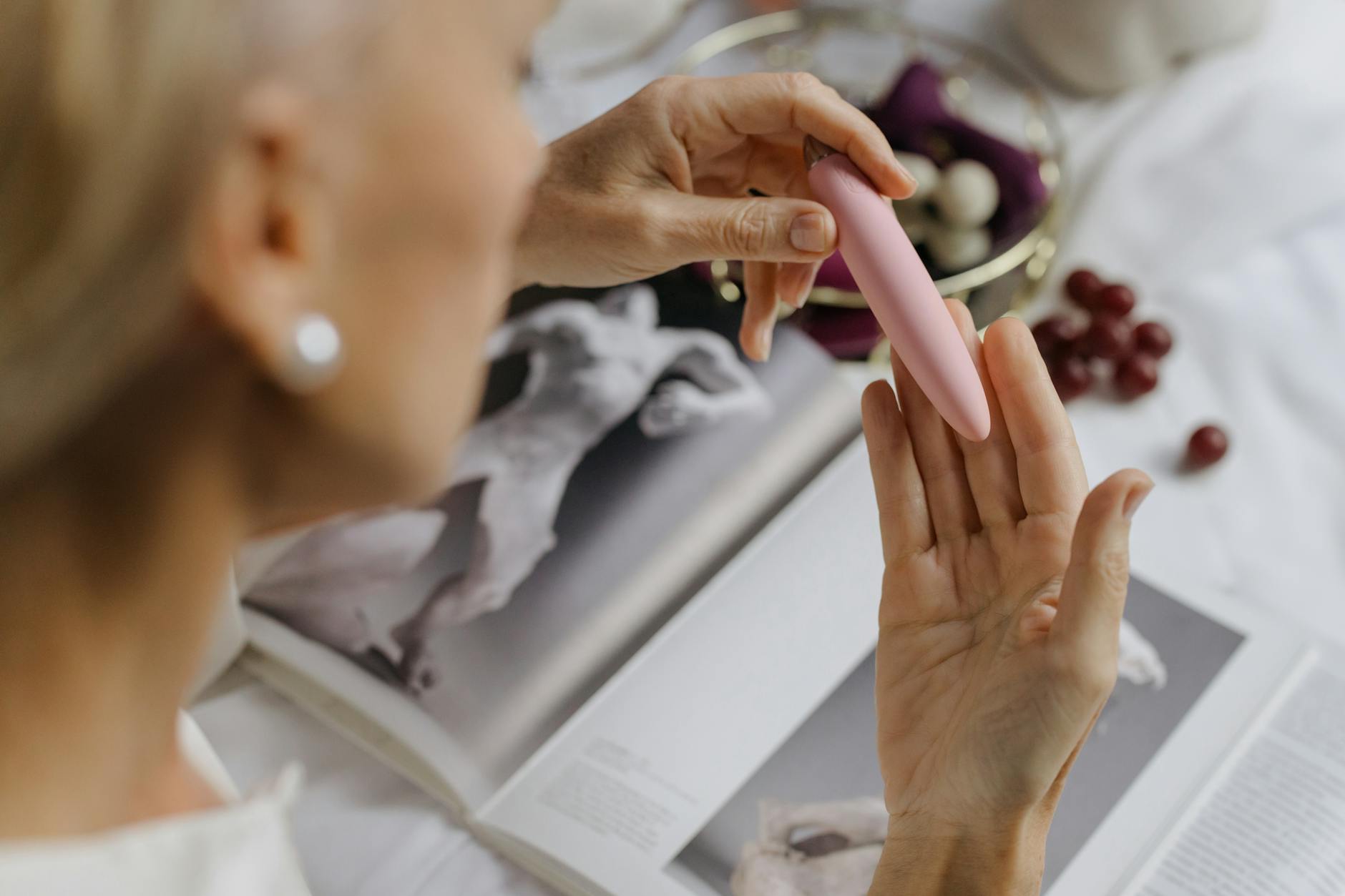
Here's the thing nobody mentions about hormonal shifts and pleasure
Your clitoral vibrator hasn't changed. Your body's response to it has. This is not a sign something is broken. It's a sign that hormones have rewired how sensation travels through your nervous system, and honestly, understanding that difference is half the battle.
I work with people all the time who assume that if their lemon vibrator suddenly feels less intense, or weirdly numbed out, or almost too strong, they've lost some capacity for pleasure. That's not what's happening. What's happening is more like turning the dial on a radio. The station is still there. The broadcast hasn't stopped. The frequency just shifted.
What hormones actually control about sensation
Estrogen and testosterone don't just affect your mood or energy. They reshape the tissue in your vulva, they change blood flow patterns, they alter how sensitive your nerve endings are. When your hormones fluctuate, your clitoral tissue becomes thinner or thicker, more or less vascularized, more or less responsive to pressure and vibration.
Here's the part that matters: your clitoral nerve density doesn't change. You're not losing sensation capacity. You're experiencing a shift in how that capacity is triggered.
When estrogen drops (whether from birth control, perimenopause, postpartum, or medication), the tissue around your clitoris becomes thinner and more delicate. Your clitoral vibrator now has direct access to more nerve endings, which sounds great until it doesn't. Suddenly something that used to feel pleasurable feels like too much, or inconsistent, or you can't quite find the right pressure.
When testosterone drops simultaneously, arousal takes longer to build. Your clitoris engorges more slowly, which means you need more time (and patience) before stimulation feels good.
Why lemon clitoral vibrators behave differently now
Let's get specific. If you've been using a lemon vibrator and it suddenly feels weird, here's the likely culprit.
Before hormonal changes, your clitoris probably engorged pretty fully when aroused. The tissue became plump, less sensitive to pressure, and more able to handle direct, sustained stimulation. A lemon vibrator's suction pattern was novel and building. You could go to a higher intensity relatively quickly.
After hormonal changes, your clitoris doesn't engorge the same way. The tissue is more exposed. Direct suction might feel overwhelming or even painful if you go too fast. Or the opposite: it might feel numb or distant, like you're not connecting to the sensation at all.
This is temporary adaptation, not permanent loss.
The intensity recalibration that actually helps
If your lemon clitoral vibrator used to feel perfect on setting 5 and now setting 2 feels like too much, you're not broken. You need a different approach.
Three adjustments I recommend immediately:
Start slower and lower. I mean this literally. Begin on setting 1 and spend 10-15 minutes there before increasing. Your nerve endings need time to acclimate to the new hormonal landscape. Rushing the intensity is like driving a car with the high beams on in fog. Everything looks blurry and hostile.
Add a warm-up layer. Before you use a clitoral vibrator at all, spend time with manual stimulation or a partner's touch. This gradually increases blood flow to your clitoris and helps it engorge, even if the engorging is slower or less dramatic than it used to be. Think of it as priming the pump.
Adjust your positioning. If direct stimulation feels overwhelming, try angling the lemon vibrator slightly off-center, or using it over your underwear, or pressing it against the clitoral hood rather than directly on the glans. You're looking for pressure that registers as pleasure, not pressure that reads as pain.
The mental part that changes too
Here's where couples often get stuck and don't even realize it. When your clitoral sensitivity shifts, the emotional experience shifts too. You might feel embarrassed that you can't "just come" the way you used to. Your partner might feel confused or take it personally.
Neither of those is productive. What helps is naming it: "My body is responding differently right now. That's not about you or about whether I'm attracted to you. It's a hormonal shift, and we're going to figure out what works now."
Separate the technical problem (sensation mapping) from the emotional problem (reassurance and patience). Those need different solutions.
When this points to something bigger
If sensation has completely disappeared and hasn't come back after two months of adaptation, or if the change happened overnight with other symptoms (sudden fatigue, mood changes, irregular bleeding), talk to a doctor. Sometimes what looks like just a sensation shift is actually a thyroid issue, medication side effect, or hormonal imbalance worth investigating.
If you're using birth control and noticed the change right after starting it, talk to your prescriber about whether a different formulation might work better. There's a real difference between a hormonal change you can adapt to and a medication that's making pleasure harder than it should be.
Using clitoral vibrators through the adjustment
You don't need to stop using your lemon vibrator while your body recalibrates. You just need to use it differently.
Add water-based lubricant. This helps even if you're naturally lubricated, because it reduces friction and makes the sensation feel rounder, less sharp.
Extend your timeline. If you used to use a clitoral vibrator for 5-10 minutes total, budget 20-30 minutes now. Arousal just takes longer. That's not a problem if you stop treating it like one.
Experiment with patterns you haven't used before. Sometimes a pattern that felt "meh" before becomes exactly right after hormonal changes. The lemon sucker design is great for this because the intensity range is broad enough that you can usually find the right frequency.
The FAQ part nobody thinks to ask
How long does it take for sensation to stabilize after hormonal changes?
Typically 4-8 weeks. Your nervous system is plastic, which means it adapts. The timeframe depends on how big the hormonal shift was and whether you're actively exploring what feels good. People who experiment and adjust their technique stabilize faster than people who avoid pleasure altogether hoping it returns to normal.
Can birth control affect how clitoral vibrators feel?
Absolutely. Hormonal birth control doesn't just prevent pregnancy. It changes your baseline estrogen and progesterone levels, which changes tissue sensitivity, lubrication, and blood flow. Some people find that a different birth control formulation (lower dose, different progestin) feels better. If you started birth control and clitoral sensation changed, that's a real conversation to have with your prescriber.
Is numb clitoral sensation from hormonal changes permanent?
No. It's usually adaptable or reversible. Sometimes it just means you need different stimulation. Sometimes it means exploring whether another factor (stress, medication, relationship tension) is also playing a role. Talk to a doctor if it persists beyond two months.
Should I use a different clitoral vibrator if my sensation changed?
Not necessarily. Most of the time, the same vibrator works, just at a different intensity or pattern. That said, if you were always on the highest setting and your body can't tolerate that anymore, a vibrator with a gentler range might feel more intuitive. But adapt first, buy second.
Can I use lemon vibrators if my clitoral tissue is thinner from hormonal changes?
Yes, and they're often better suited to thinner tissue than other designs because suction distributes pressure over a wider area. Start low, go slow, and add lubrication. The suction design is actually pretty forgiving for bodies in hormonal transition.
Is it normal for clitoral vibrators to feel too intense after starting an SSRI or hormonal medication?
Yes. SSRIs and some hormonal medications (like spironolactone) can dull sensation or delay orgasm. This is frustrating, but it's also workable. You might need a different stimulation pattern, longer warm-up time, or a conversation with your prescriber about timing or dosage. It's not permanent.
The recap you actually need
Your clitoral vibrator didn't stop working. Your body's hormonal environment changed, which changes how stimulation feels. This is reversible, adaptable, and totally normal. The lemon vibrators that work so well for responsive bodies can work just as well for bodies in hormonal transition. You just need to adjust your settings, timeline, and lubrication.
If you're feeling frustrated or disconnected from pleasure right now, that's valid. And it's also temporary. Give yourself permission to explore what feels good now, not what felt good before. That exploration is how your nervous system recalibrates.
Your pleasure matters, and it evolves. Reach out to us if you want to talk through what's happening or get personalized guidance on adapting your approach.